

Contents
Where the name comes from
The town was first called Sabang, after the river that runs through it. Its present name, meaning good view, was given by Don Cornelio Sadiua, and many residents trace their ancestry to his family.[1]
Research on Marinduque place names offers a second account: it credits Fr. Clemente San Ignacio, a native priest who served Gasan from 1846 to 1888, with naming the barrio around 1880. Buenavista became a separate town from Gasan on November 9, 1918.[4]
World War II
Japanese forces landed at Patay Ilog in 1942. Rugged terrain and pro-American feeling made the town a headquarters of the resistance; the occupiers burned its school and municipal building, and residents hid and helped Filipino and American soldiers at the risk of execution.[1]
In the Libas Ambush, guerrillas and townspeople killed a group of Japanese soldiers. In 1945 Allied forces landed at Caigangan beach and won the Buenavista Campaign, a major offensive of the Battle of Marinduque. Afterwards the town served as headquarters of the 5th Infantry Division of the Philippine Commonwealth Army and the U.S. Army Signal Corps; Pablo Pe's Bodega was the Signal Corps headquarters.[1]
Mount Malindig and the coast
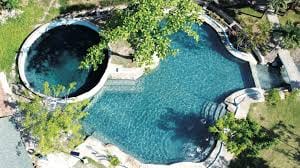
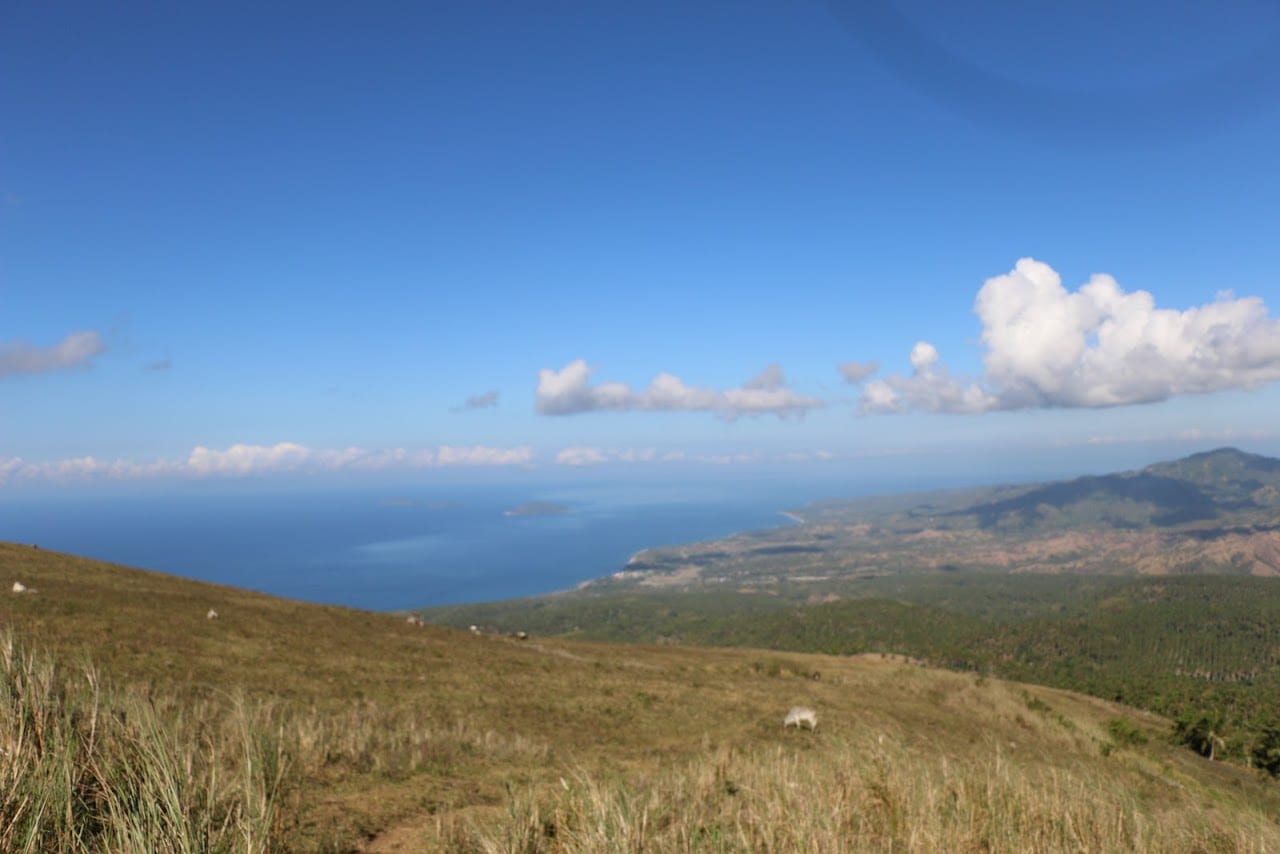
Mount Malindig, a volcanic peak, heats the Malbog Hot Springs, sulfur springs that people visit for their reputed healing properties. Offshore, Elephant Island (once called Isla Perro) became the site of Bellarocca Island Resort and Spa in 2009.[1]
Inuman Bato is a tidal pool that fills with fresh water at low tide; it appeared in a Ripley's feature in the 1950s. The Palengke Seaside Pavilion hosts local events.[1]
Festivals and food
The Santo Niño Festival is a four-day food and family celebration in January; the parish of the Holy Child Jesus keeps its fiesta on January 19. Flores de Mayo runs through May, with children offering flowers to the Virgin Mary.[1][5]
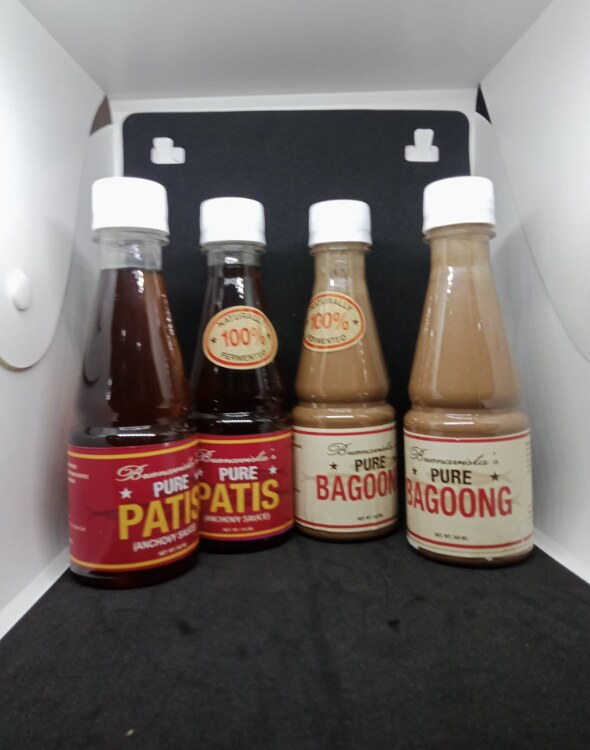
Local foods include kalamay-hati, maja blanca, suman, puto and bagoong.[1]
Timeline
- 1918
Buenavista is founded on November 9.[1]
- 1942
Japanese forces land at Patay Ilog; the town becomes a resistance headquarters.[1]
- 1945
Allied forces land at Caigangan beach for the Buenavista Campaign.[1]
- 1954
The Holy Child Jesus parish is established.[5]
- 2009
Bellarocca Island Resort and Spa opens on Elephant Island.[1]
Notable people
Don Cornelio Sadiua
Gave the town its name; many residents trace their ancestry to his family.[1]
Fr. Clemente San Ignacio
Native priest of Gasan (1846–1888). Place-name research attributes the name Buenavista to him around 1880, while local accounts credit Don Cornelio Sadiua.[1][4]
Family names
Most family names in Marinduque, as elsewhere in the Philippines, trace back to Governor-General Narciso Clavería's decree of November 21, 1849, which sent a catalogue of surnames to every province so families could adopt or be assigned one. In many towns the names handed out began with the same letter. No official count of the most common surnames per town is published, so below we list only family names that appear in the town's documented history.[7]
- Sadiua (Sadiwa)Many residents trace their ancestry to the family of Don Cornelio Sadiua, who named the town.[1]
- PePablo Pe's Bodega in the town served as the U.S. Army Signal Corps headquarters after the liberation in 1945.[1]
Places to visit in Buenavista
Attractions (7)
See all →
Restaurants (6)
See all →


Places to stay (5)
See all →


Local products (1)
See all →
Specialty stores (3)
See all →
Churches in Buenavista
Our directory lists 27 churches and chapels in Buenavista, parish churches first.
- Holy Child Jesus Parish ChurchParish church
- Antipolo Catholic ChapelChapel
- Bagtingon ChapelChapel
- Bancoro Mission OutreachChurch
- Buenavista Seventh-day Adventist ChurchChurch
- Come To Jesus Fellowship International - MarinduqueChurch
- Daykitin ChapelChapel
- Door of Faith Church CaiganganChurch
- Door of Faith Church SihiChurch
- GGCC Marinduque - BuenavistaChurch
- Green Valley Christian FellowshipChurch
- IFI EscoltaChurch
See all 27 churches in Buenavista →
Schools in Buenavista
27 schools in our directory: 18 elementary school (kindergarten to grade 6), 5 high school (grades 7 to 12), 2 junior high school (grades 7 to 10), 1 elementary school (kindergarten to grade 2), 1 college / university (grades 7 to 12).
- Bagtingon National High SchoolHigh school (Grades 7 to 12)
- Buenavista National High SchoolHigh school (Grades 7 to 12)
- Buenavista National High School - Bagacay AnnexHigh school (Grades 7 to 12)
- Buenavista National High School - Daykitin AnnexJunior high school (Grades 7 to 10)
- Buenavista National High School - Lipata-Tungib AnnexHigh school (Grades 7 to 12)
- Buenavista National High School - Sihi AnnexJunior high school (Grades 7 to 10)
- Marinduque Victorians CollegeCollege / university (Grades 7 to 12)
- Yook National High SchoolHigh school (Grades 7 to 12)
See all 27 schools in Buenavista →
The 15 barangays of Buenavista
- Bagacay
- Bagtingon
- Barangay I (Pob.)
- Barangay II (Pob.)
- Barangay III (Pob.)
- Barangay IV (Pob.)
- Bicas-bicas
- Caigangan
- Daykitin
- Libas
- Malbog
- Sihi
- Timbo
- Tungib-Lipata
- Yook
Need to ask someone local? See the Buenavista municipal and barangay contacts.
Questions about Buenavista
When was Buenavista, Marinduque founded?
On November 9, 1918, which makes it the youngest of the six towns.[1]
What was Buenavista's old name?
Sabang, after the river that runs through the town.[1]
Where are the Malbog Hot Springs?
In Buenavista, near Mount Malindig, whose volcanic heat warms the sulfur springs.[1]
What is the population of Buenavista?
24,136 in the 2024 census, the smallest of Marinduque's towns.[1][2]
What happened in Buenavista during World War II?
It was a resistance headquarters. In 1945 Allied forces landed at Caigangan beach for the Buenavista Campaign of the Battle of Marinduque.[1]
Sources
- [1]Wikipedia, Buenavista, Marinduque (and the sources it cites)
- [2]Philippine Statistics Authority, 2024 Census of Population (POPCEN) counts
- [3]Philippine Statistics Authority, PSGC: Province of Marinduque
- [4]Social Science Diliman, Tracing the Provenance of Marinduque Toponyms
- [5]ParishPH, Holy Child Jesus Parish, Buenavista (listing dated 2024)
- [6]DILG, Municipality of Buenavista LGU profile
- [7]Wikipedia, Catálogo alfabético de apellidos (Clavería decree of 1849)
Places, churches and schools come from Marinduque Guide's own listings. Last reviewed November 2026. Spot something wrong? Tell us through our About page.