Simbang Gabi in Marinduque: The Heritage Churches Worth Waking Up For
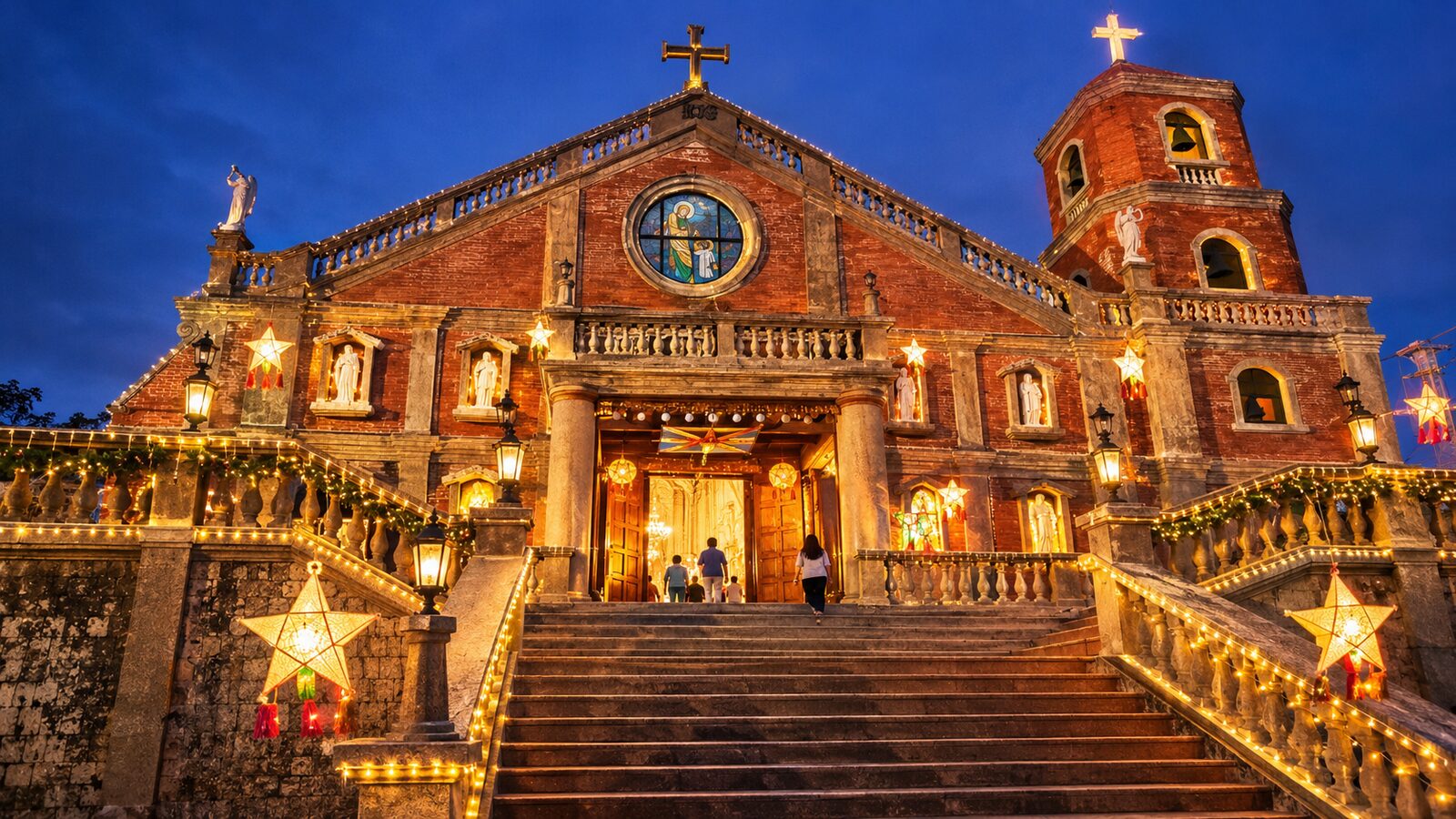
There's a particular kind of tired you only feel during Simbang Gabi. The alarm goes off while it's still dark, the roosters haven't even started, and you drag yourself to church with a jacket over your pambahay. Then you walk out an hour later into a cool morning that smells like bibingka, and it all makes sense again.
If you're spending Christmas in Marinduque, you get to do this in some of the oldest churches in Southern Tagalog. Here's what to know, where to go, and how to avoid showing up at the wrong hour.
Simbang Gabi in a nutshell
Simbang Gabi is a nine-day series of Masses leading up to Christmas.
- The dawn Masses run December 16 to 24.
- Evening "anticipated" Masses run December 15 to 23, for people who can't make the early ones.
- The last Mass, on Christmas Eve, is the Misa de Gallo, the "Rooster's Mass."
The tradition goes back to 1669, during the Spanish period. Priests held Mass before dawn so farmers could attend before heading out to the fields. Many Filipinos believe that if you complete all nine days, your wish or prayer intention may be granted. Whether or not you believe that part, finishing all nine is a small accomplishment, and every Lola in your family will be proud of you.
The parol is part of this story too. Those Christmas lanterns were originally used to light the way to the pre-dawn Mass.
In 2026, Christmas Eve, December 24, is a special non-working day and falls on a Thursday. Christmas Day is a Friday. If you're home for the holidays, the last few Masses of the novena line up neatly with a long weekend.
Marinduque's heritage churches for Simbang Gabi
You can hear Simbang Gabi in any parish on the island, and honestly the best church is the one closest to where you're sleeping. That matters a lot at 4 a.m. But if you want history with your novena, these three are special.
Boac Cathedral (Boac)
The Immaculate Conception Cathedral Parish, better known as Boac Cathedral, is the seat of the Diocese of Boac. The church was built in the 1700s and dedicated in 1792, and it's still surrounded by its old defensive walls. Townspeople reportedly took refuge behind them during pirate attacks. The National Museum declared it an Important Cultural Property in 2018, and it was named a jubilee church in 2021 for the 500 Years of Christianity celebration. It also houses the Diocesan Shrine of the Mahal na Birhen ng Biglang Awa, the patroness of the province.
It sits on a low hill in Barangay San Juan, a short but steep walk up from Boac Plaza. At dawn that climb is a lot more pleasant than it is at noon. The parish's Facebook page is fb.com/icpboac, and that's where to look for the 2026 Simbang Gabi times.
St. Joseph Parish Church (Gasan)

Gasan's St. Joseph Parish Church, officially St. Joseph Spouse of Mary Parish, was established in 1609. That makes it one of the early generation of Philippine parishes, with more than four centuries of town life behind it. It's known for its architecture and interior detail, the kind of church that rewards you for looking past the façade. It's part of the Diocese of Boac.
The parish's listed numbers are +63 951 648 3213, (042) 342 1068, and 0977 739 3067. Call or message ahead for this year's Simbang Gabi schedule.
Holy Cross Parish (Santa Cruz)
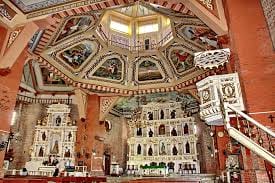
In Pag-asa Poblacion, Santa Cruz, the Holy Cross Parish, or Santa Cruz Church, was built in 1714. It's one of the oldest and most historic Catholic churches in Southern Tagalog, and it's an active parish with a full calendar of Masses. The address is 3 Mabini, Pag-asa Poblacion. Once you're in the Santa Cruz town center you can walk there, and locals will point you the right way.
If you're staying on the east side of the island, near Maniwaya Island or Poctoy White Beach, this is your church.
Your own town's parish
Mogpog, Buenavista, and Torrijos all have their own parishes, and Simbang Gabi in a smaller town church has its own charm. Everyone knows everyone, and the kids are half-asleep in the front row. If you're staying with family, go where they go.
Don't trust a blog for Mass times, including this one
Every parish sets its own Simbang Gabi schedule each year. Dawn Masses in many Philippine parishes start around 4 a.m., but times differ by church, and some parishes add Masses in barangay chapels. The anticipated evening Masses vary even more.
So before your first night:
- Check the parish's Facebook page in early December. Most post a Simbang Gabi schedule.
- Call the parish office if you can't find it online.
- Ask your host. Whoever's hosting you, whether that's a relative, a resort, or a homestay, will know the local rhythm.
We'd rather you get the exact time from the parish than oversleep because of an old schedule.
After Mass: bibingka, puto bumbong, and something warm
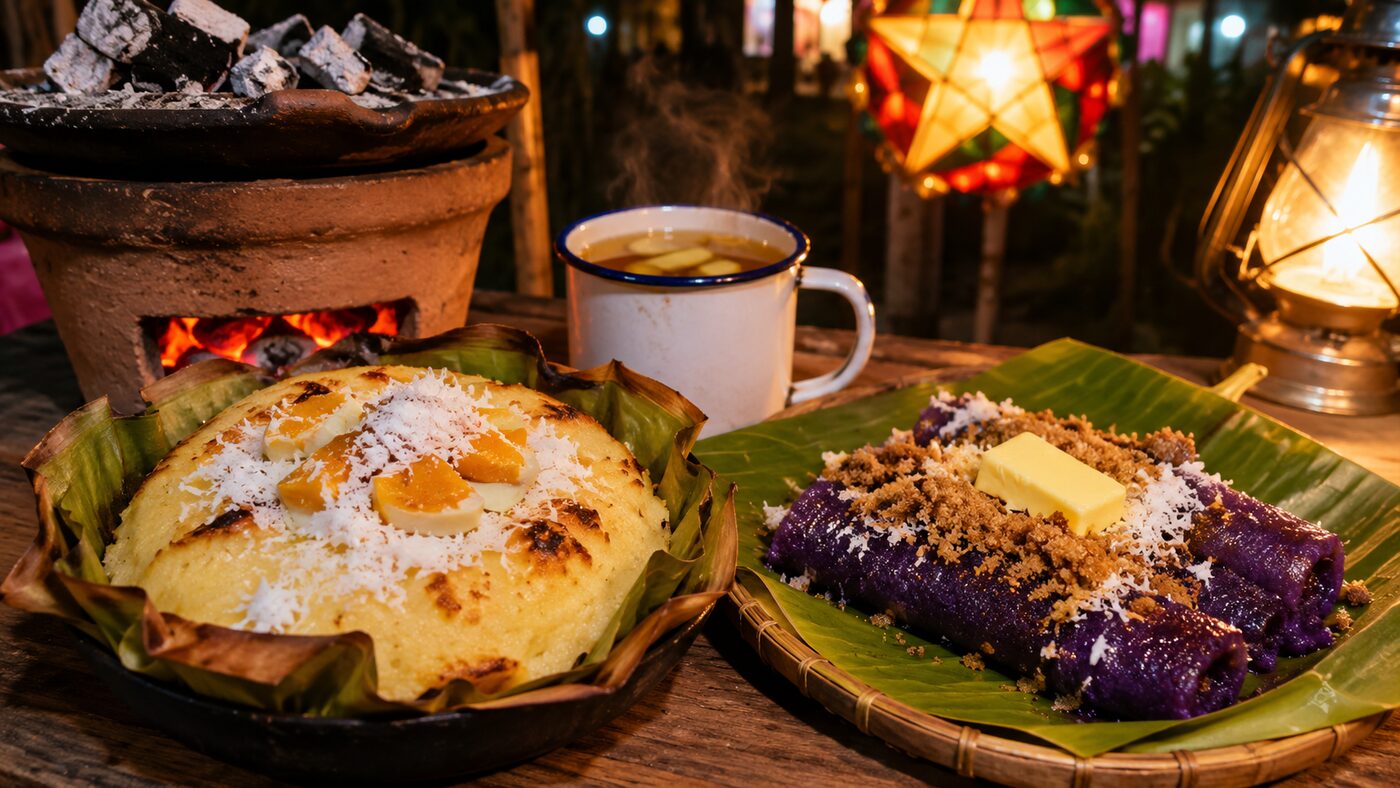
The other half of Simbang Gabi happens outside the church. The classic post-Mass snacks are bibingka and puto bumbong, usually with tsokolate or salabat to warm you up. In Marinduque you have some local options:
- In Boac: Bibingkang Lalaki, Boac's big, custard-like rice cake made with eggs and tuba and traditionally cooked over burning coconut husks. Look for the round tins at the Boac Public Market and the roadside stalls in the town center.
- In Santa Cruz: the town is home to Bibingkang Pinahiran, a glutinous rice cake with coconut milk and brown sugar, topped with thick syrup. It's made in small batches, so ask at the Santa Cruz Public Market who has a fresh batch.
Stalls outside churches during Simbang Gabi come and go, so bring small bills and buy when you see something good. It won't be there tomorrow.
Tips for surviving nine early mornings
- Sleep early. Obvious, ignored by everyone. Try anyway.
- Bring a light jacket. December mornings and evenings in Marinduque can be cool and breezy, especially near the coast.
- Dress for church. Covered shoulders and long pants or a skirt. These are active parishes, not tourist sites.
- Arrange your ride the night before. A tricycle can be hard to flag down before dawn. If your church isn't walking distance, ask your driver or host the night before.
- Go to the evening Mass if dawn isn't happening. The anticipated Masses from December 15 to 23 are there for exactly that, and they pair well with seeing the lights. In Torrijos, the Tunnel of Lights is lit in the evenings through December, and Boac has its Christmas village. Our Christmas in Boac guide has both.
- Coming in from Manila for the last stretch? Book early. The days before Christmas are the busiest of the year at Lucena. Read our tips on beating the Christmas rush at Lucena Port before you go.
Frequently asked questions
When is Simbang Gabi 2026? The dawn Masses run December 16 to 24, ending with the Misa de Gallo on Christmas Eve. Evening anticipated Masses run December 15 to 23.
What time does Simbang Gabi start in Marinduque? It depends on the parish. Dawn Masses in many Philippine parishes start around 4 a.m., but check each parish's Facebook page or call the parish office for the 2026 schedule.
Which is the oldest church in Marinduque? Of the churches in this guide, Gasan's St. Joseph Parish was established in 1609. Holy Cross Parish in Santa Cruz was built in 1714, and Boac Cathedral was dedicated in 1792.
Is Boac Cathedral a heritage site? Yes. The National Museum of the Philippines declared it an Important Cultural Property in 2018, and it was designated a jubilee church in 2021.
What do people eat after Simbang Gabi? Bibingka and puto bumbong, usually with hot chocolate or salabat. In Marinduque, look for Bibingkang Lalaki in Boac and Bibingkang Pinahiran in Santa Cruz.
Sources: Wikipedia — Simbang Gabi, Wikipedia — Boac Cathedral, ParishPH — Immaculate Conception Cathedral Parish (Boac Cathedral), St. Adalbert Church — Simbang Gabi, Globe — Official list of 2026 Philippine holidays. Marinduque Guide place pages: Boac Cathedral, St. Joseph Parish Church, Holy Cross Parish, Bibingkang Lalaki, Bibingkang Pinahiran, Santa Cruz Public Market, Torrijos Tunnel of Lights.